
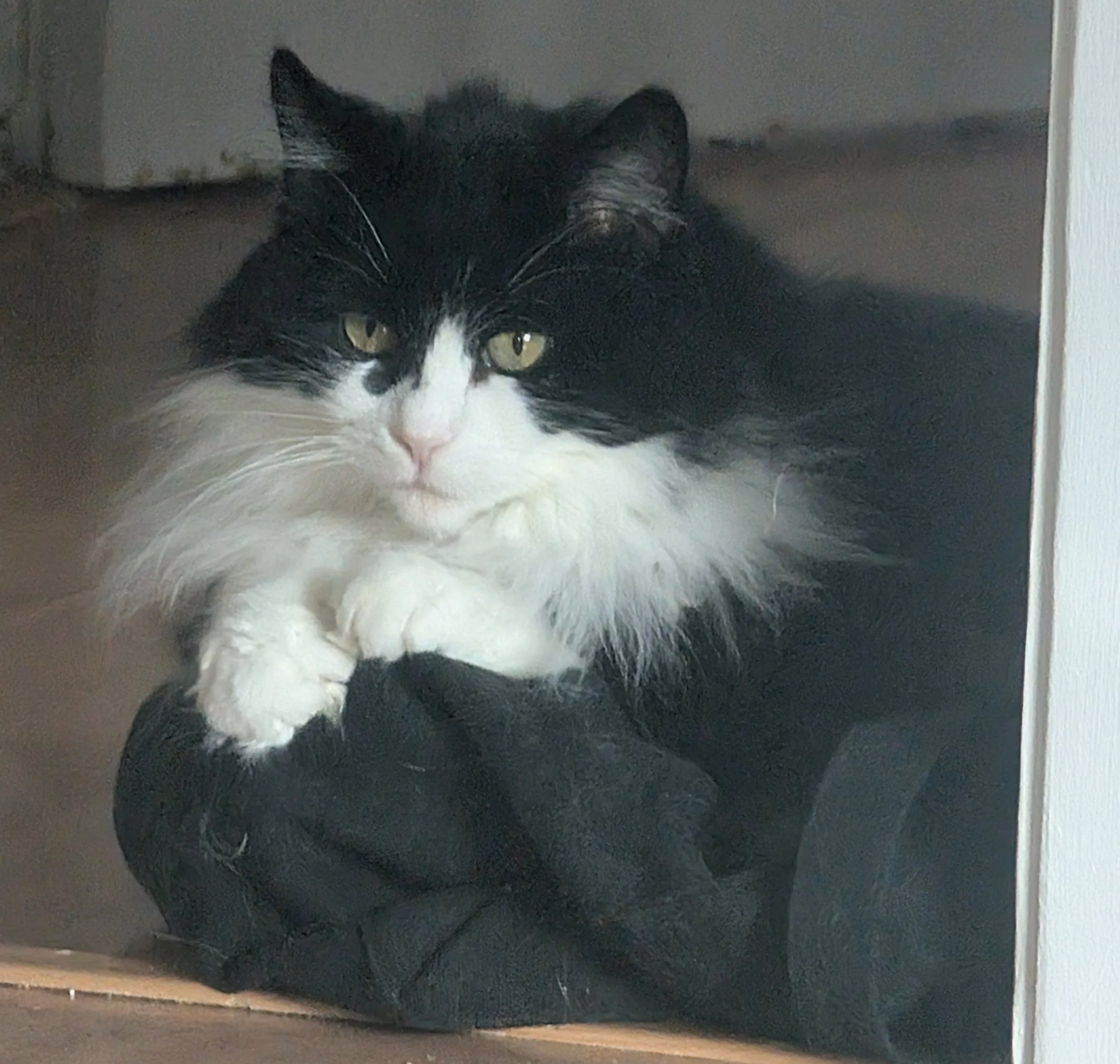
My cat, Trixie Meowtel, is smart. Well, she’s suspicious. She’s also undersocialized. Since handling terrifies her, a trip to the vet is a high-stress proposition. One time, she started fully hyperventilating in the car. Her vet gave her gabapentin, a mild sedative, to help make the experience a little easier. The only problem? She’s too smart to take her pills if I just put them in a bowl with some treat on them, and I don’t want to actively pill her since I’ve spent so long building up her trust. So, how do I get pills into her?
Well, much like most things with a nervous, suspicious cat, the trick is to make the novel thing normal. That’s why we advise leaving carriers out all the time rather than pulling them out only for travel. Cats are SMART, and they will learn cues and signals, especially for things they love (food and treats) and things they hate (carriers and pills).
So, how did I normalize the pills? After all, I can’t give them to her every day.
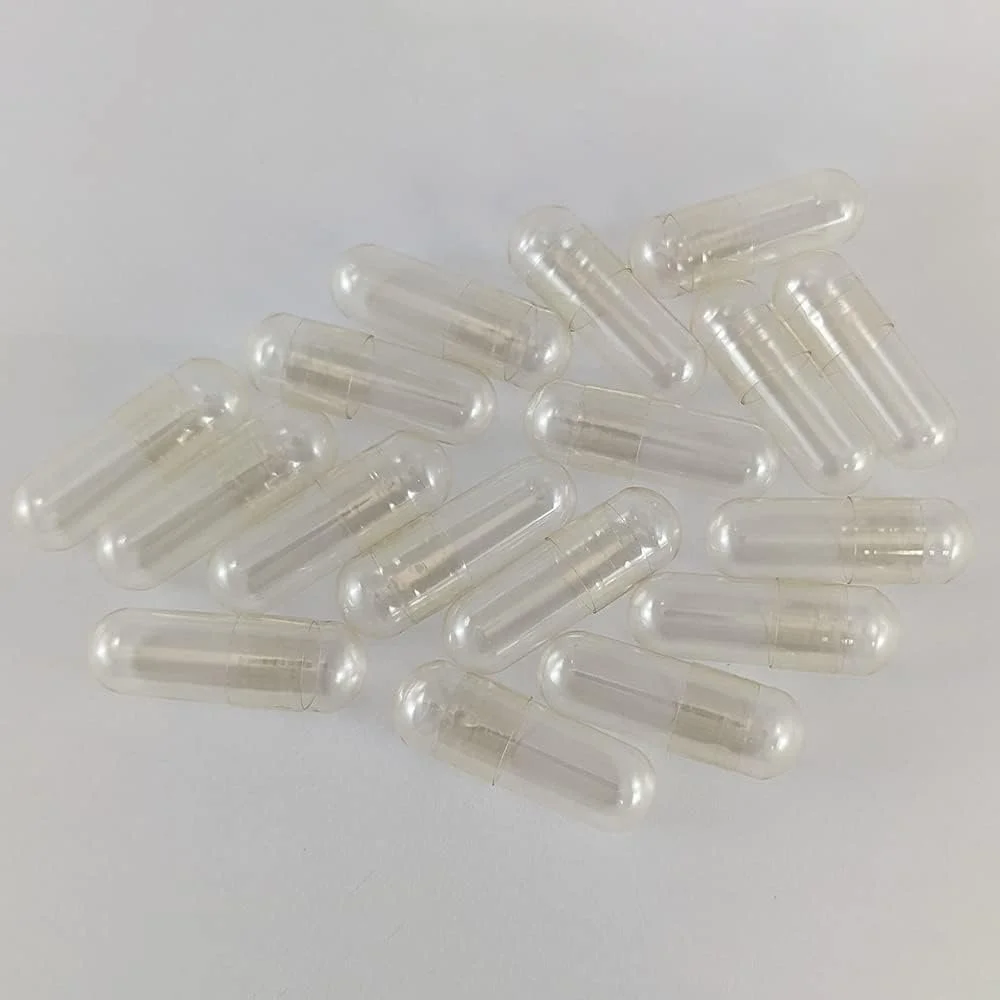
Turns out, you can buy empty gel caps the same size as her gabapentin pills, so I bought a bunch and started giving them to her every day.
Now, obviously, she was still suspicious at first. I couldn’t put the placebo pill in a separate bowl from her food, as that was a signal to her that something was wrong. Any time she’d eaten a treat from that bowl, she got put in a carrier and taken to the scary place.
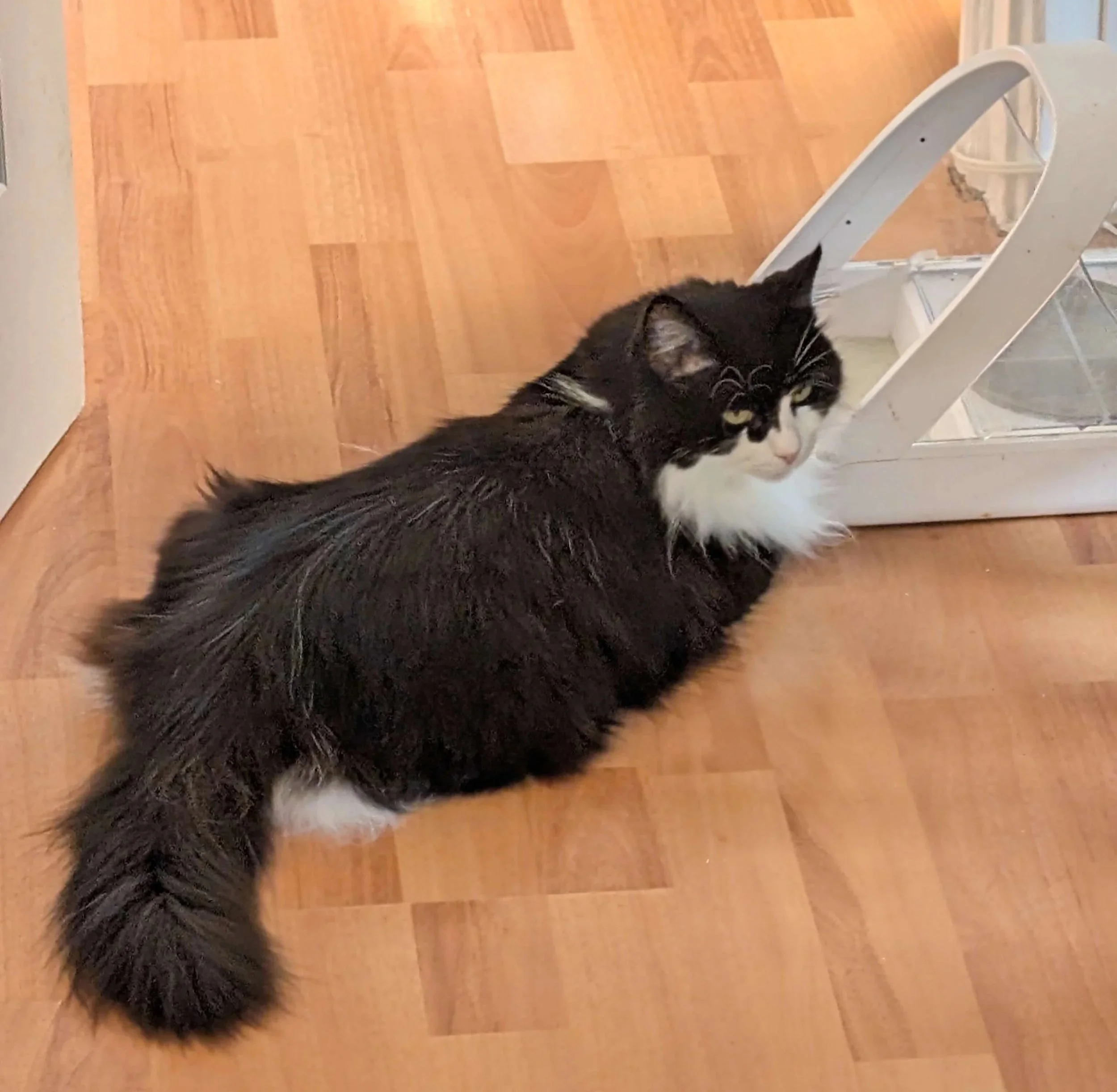
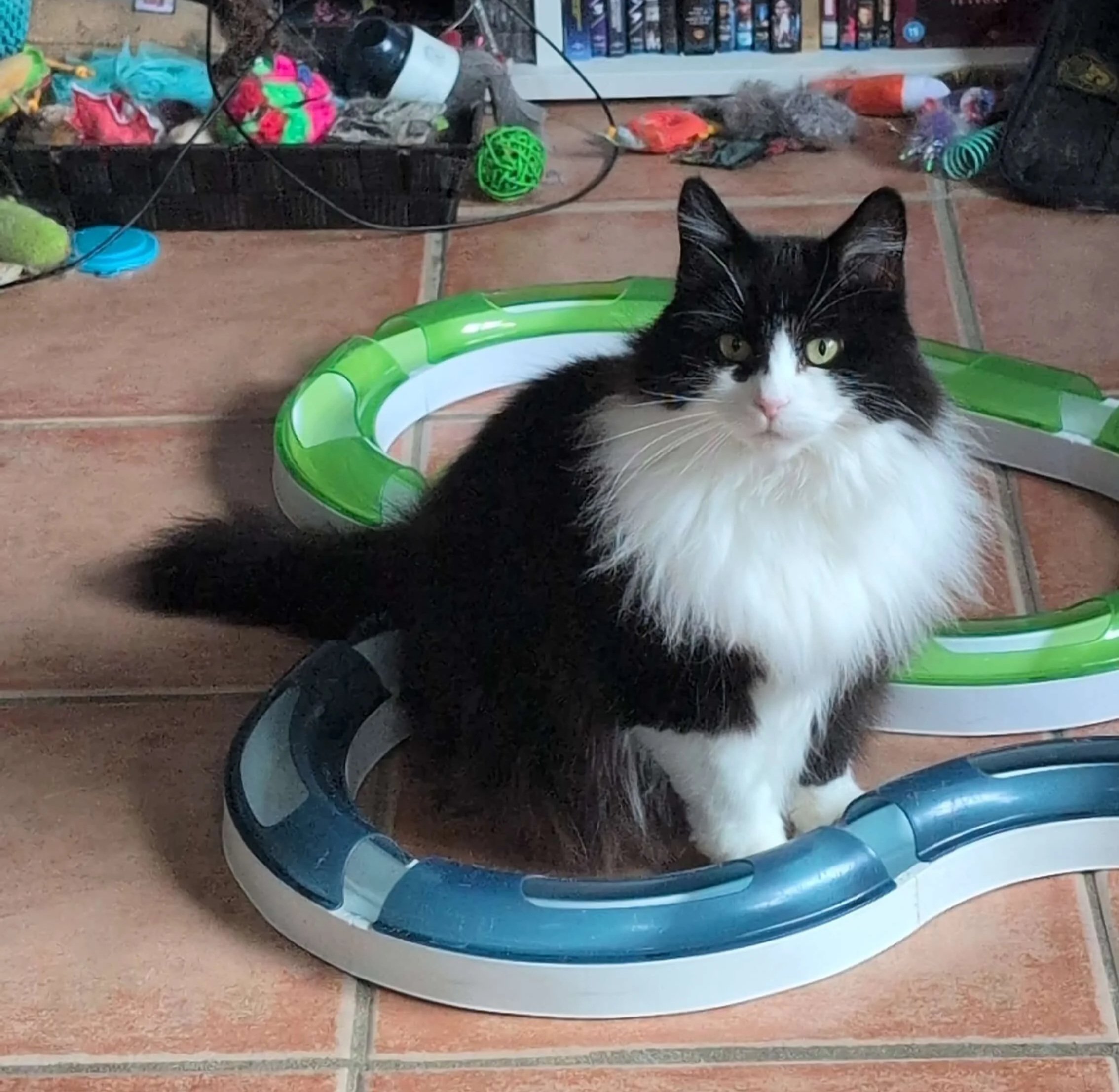
Trixie with her most prized possession.
So, I started putting it in her regular bowl. However, that was still a bit suspicious because of the capsule’s shape and/or texture. Here’s the full breakdown of the steps I took to get Trixie to the point where she will eat her two gabapentin capsules on vet day with absolutely no fight or drama. We stayed at each step until I was sure she was eating the placebo pills daily.
I opened the empty capsule so it was only half and put some of the tube treat inside and on top. That changed the shape and texture enough that she’d eat it.
Eventually, I started putting in the whole capsule covered in tube treat.
I started putting in two capsules covered in tube treat.
About a month and a half before the vet visit, I split one capsule up into 4 (so there was about ¼ of the powder in 4 different capsules) and switched out one placebo pill for one small-dose pill. I did this on 4 completely random days over the next 6 weeks. I made sure to switch between weekends and weekdays so my routine varied a bit. The goal was for her to get a little drowsy without anything happening afterward. That way, she wouldn’t associate drowsiness with being put in her carrier. Otherwise, I was pretty sure she’d be under the couch the second it started.
Finally, on vet day, I switch out the two placebos for two real pills.
From start to finish, that process took several months. It’s really important not to move from step 1 to 2 or 2 to 3 until the cat is reliably and without suspicion eating the placebo capsule. If you move on and find they won’t eat it, go back a step and keep going a bit longer. Any desensitization training with cats - especially cats who are naturally more nervous - is going to take a long, long time. So, start well before the time you have to give the medication and keep it up every day between visits as well.
The goal is to make those weird things in the bowl just another treat, not anything novel. Novel things are scary. Familiar things are safe.
This method also works well if your cat needs several pills a day or takes daily tablets that taste bad. Cats have incredible senses of smell and taste and can notice even minor differences. Tablets can start to dissolve when you put them in wet food or a tube treat, which can alter the taste. Putting them in a capsule prevents that. Plus, if you have to give several tablets, putting them all in one capsule (if they fit) is a great way to cut down on the number of pills your cat has to swallow.
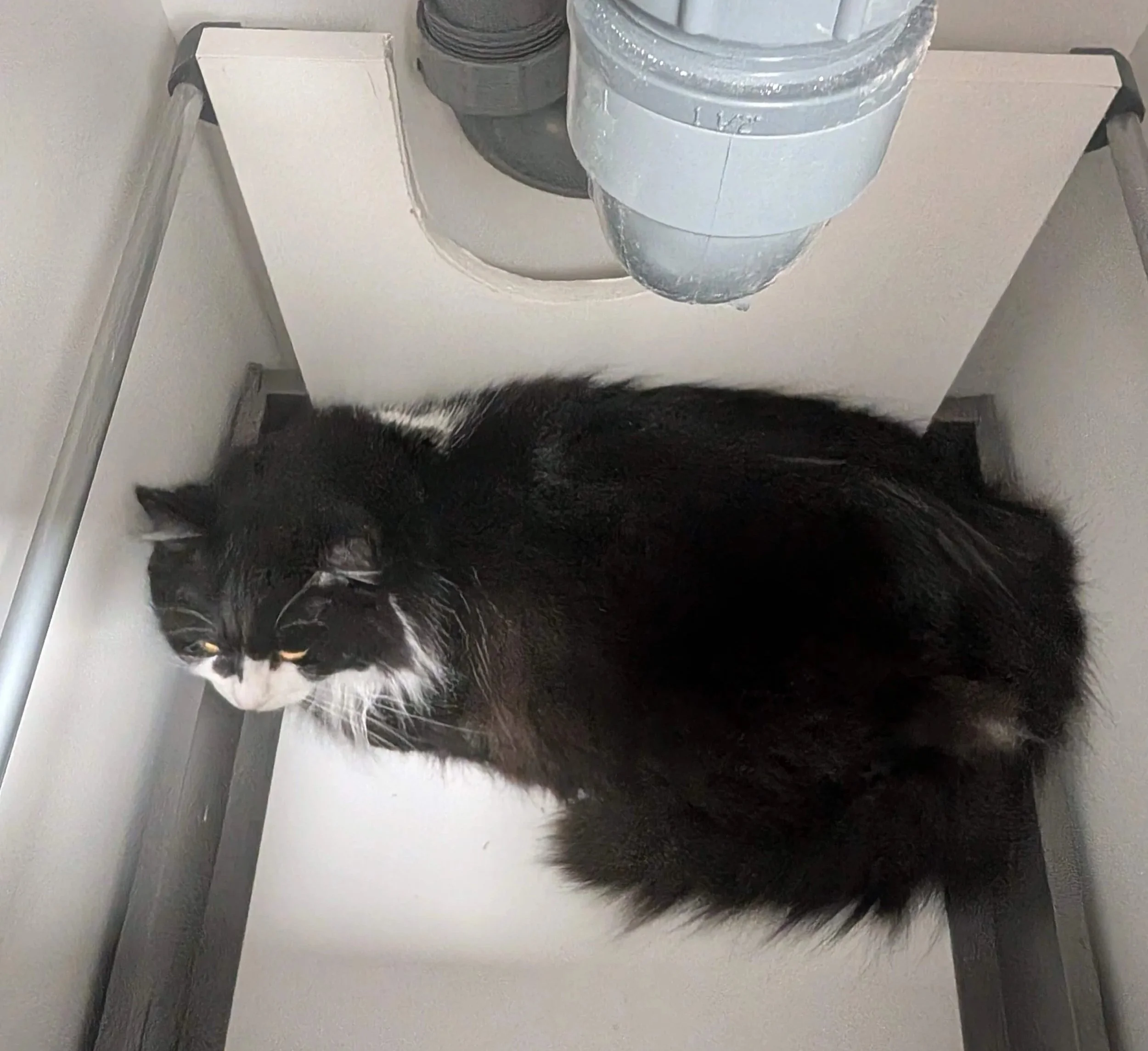
At the vet, she’ll still do her best to hide. For instance, under the sink.
Important tips:
Don’t use their normal food. You don’t want to risk them going off that food entirely. Try tube treats since if they go off one flavour or even the brand, it won’t affect their daily nutrition.
Patience! It can take a while to get to the point where they eat the placebo daily without suspicion. I cannot stress this enough: patience is the most important thing when working on any desensitization training with your cat. You can only move on once the cat is extremely comfortable, and that has to happen at the pace they choose, even if it’s glacially slow.
Don’t stop giving the placebos even once they’re eating them well. I will sometimes skip a day here and there, but Trixie gets them 90% of the time now. If you stop giving them most of the time, they lose their “normal” status, and you may run into avoidance issues in the future.
For gabapentin specifically, don’t open the pill and mix the powder into the treat. Gabapentin has a strong taste and smell, and cats will pick up on it immediately. This also applies to the liquid version.
So, if you’re tired of fighting with your kitty to get pills into him or her, give this a try. And if you have questions or need a more personalized plan for your kitty, please contact me at info@cleopawtra.ca